Knowledge
All About Wild Ginseng
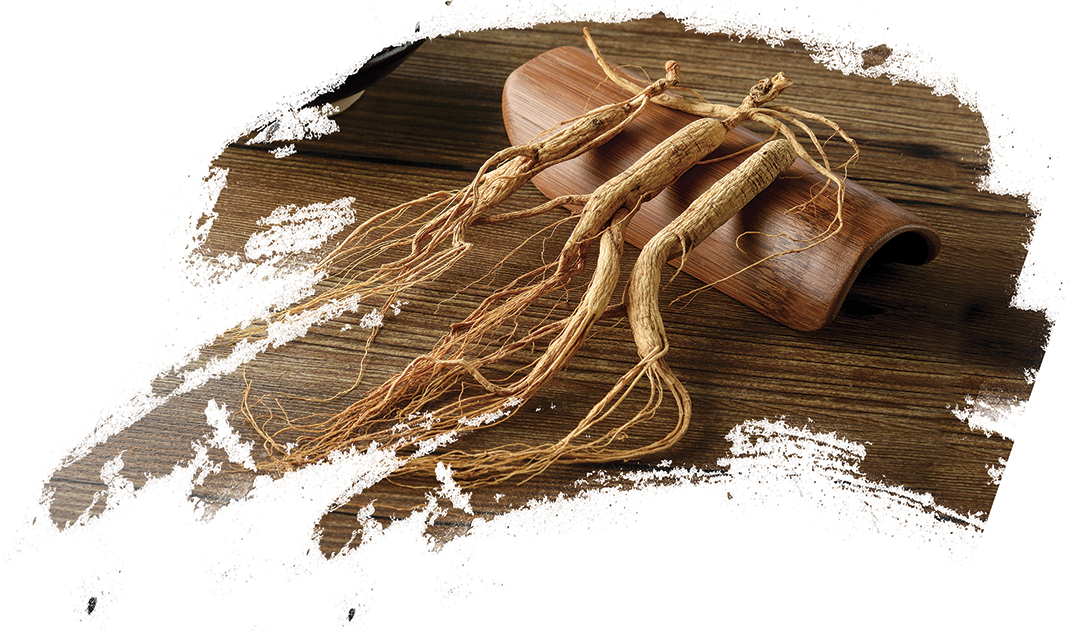
There are two types of ginseng, wild and cultivated. The price of "sansam" or wild ginseng ismuch higher than "insam," or panax ginseng cultivated on farms, mainly because they are hard to get.
Wild ginseng grows naturally and is harvested wherever it is found to be growing. It is relatively rare and is out of human reach most of the time which is why people began farming it.
In order to get wild ginseng, it must be picked from the mountains but because it is hard to detect it, people started planting ginseng seeds on farms. Human-cultivated ginseng is called "insam" where "in" in Korean means human. "San" in "sansam," on the other hand, means mountain.
There is another type of ginseng which can be categorized in between the previous two categories. It is "sanyangsansam" which is sansam cultivated in the mountains with the help of human hands. Nevertheless, it is also called wild ginseng.
The efficacy of ginseng, whether it be insam or sansam, is basically the same.
Ginseng is known to strengthen the immune system and vitalize cognitive functions. It used to be traditionally known as an elixir but growers say it should not be perceived as a panacea. More research must be done on the herb to prove what effect it has on the human body.
Wild ginseng is expensive because it is rare and not many are found wholesome.
"If five roots survive out of 100 that were planted even after 10 years then that's considered a successful cultivation," says Kim Yu-no, president of the National Wild Ginseng Association.
Wild ginseng is most nutritious when it bears a red fruit. The harvest period begins in May and lasts through October at the latest but the best time to consume it is when the fruit is red. Also, experts say one root of ginseng must be consumed twice a day for three days to see the effects, although there are some exceptional people who see the effects after eating only one.
There are various places across the nation that cultivate wild ginseng and sells it. Hamyang is one of them and even holds a wild ginseng festival every year. The one being held this weekend is the 9th held by the county and is dubbed a "promising festival" by the Ministry of Culture, Sports and Tourism.
Hamyang, located in South Gyeongsang Province, is famous for ginseng because it has historically been a home to ginseng. It is known that the first emperor of Qin Dynasty of China, Qin Shi Huang, even sent his liege to Korea to get his hands on wild ginseng when he was seeking the elixir of life. During the ancient Three Kingdoms period in Korea, Hamyang was the biggest producer of wild ginseng.
There used to be ginseng diggers called "simmani" until the 1990s in Hamyang and all over the nation who professionally dug up ginseng for living. There still are simmani but not as many as before.
These simmani see the ginseng as holy herbs and when they find a wild ginseng, they carry out a holy ritual. They shout "simbatta!" which is their own jargon for "I saw ginseng!" When the person who found the ginseng shouts "simbatta" three times, their colleagues bow down and wait until the person who found it carefully digs out the plant.
At the Hamyang Wild Ginseng Festival which is to be held from Thursday through Monday, visitors can experience being a simmani.
The participation fee is 20,000 won and the participants may take the ginseng home after digging them.
Participation for other activities at the festival is free of charge. There is no entrance fee and parking is also free.
The festival will be held in Sangnim, otherwise known as the "Thousand Year Forest," which was apparently created by people 1,000 years ago.
At the festival, ginseng growers will be selling their self-cultivated wild ginseng at their own booth.
Those who want to shout out "simbatta!" or those who want get their hands on wild ginseng at market prices, visiting the Hamyang Wild Ginseng Festival held in a forest can be a cool getaway for the weekend.
Benefits of Korean Ginseng
The All-Healing Herb
The term "Panax" is the scientific name for ginseng, which is derived from the Greek language and translates to "all-healing". This particular genus of plants contains saponins called ginsenosides, a class of compounds that cannot be found in any other plant. We make sure to allow our ginseng to grow for a period of six years in order to acquire the maximum amount of saponins in each root. Part of the Korean lifestyle and culture, ginseng boasts a number of natural health advantages.

Health Efficacies of Korean Ginseng
By promoting blood circulation and supporting bodily functions,Ginseng provides our body with the power to fight diseases ; It is a way to make our body stronger.
(1) Drs. V. D. Petkov (Bulgaria) and H. Nitta (Japan) - Study on the improvement of cognitive degradation caused by normal aging.
(2) Professor Nakanishi (Japan) - Study on the inhibition of platelet aggregation and improvement of microvascular blood supply.
(3) Dr. E. Bombardelli (Italy) - Study on the anti-fatigue and anti-stress properties of panax ginseng.
(4) S. J. Fulder (England) - Study on improvement of physical functions of the elderly.
(5) Dr. Kang, Sang Moo (USA) - Study on antiviral activity of ginseng extract against respiratory syncytial virus infection.
Maintain A Healthy Body
Korean Ginseng has many health benefits that can be found here National Center for Biotechnology Information (www.ncbi.nlm.nih.gov)
Boost Your Immune System
Korean Ginseng increases your immune system's response to foreign objects that enter your body.
Builds Stamina & Helps To Fight Fatigue
An alternative to caffeine, Korean Ginseng is an all-natural energy boost to help you get through your day.
Promotes Healthy Blood Circulation
The ingredients in Korean Ginseng helps to increase blood circulation aiding in maintaining a healthy heart and arteries.
Supports Healthy Cognitive Health
Helps to maintain a healthy brain and help with cognitive functions.
Benefits for Skincare
Utilizing the latest in modern technology, we're able to apply the same "all-healing" effects of
Korean Ginseng to skincare.
Delivers A Plentiful Supply Of Antioxidants
Antioxidants play a big role in protecting your body from free radicals. Korean Ginseng is full of antioxidants that assist your cells in preventing diseases that may develop in your body.